Author, scientist and historian

Welcome
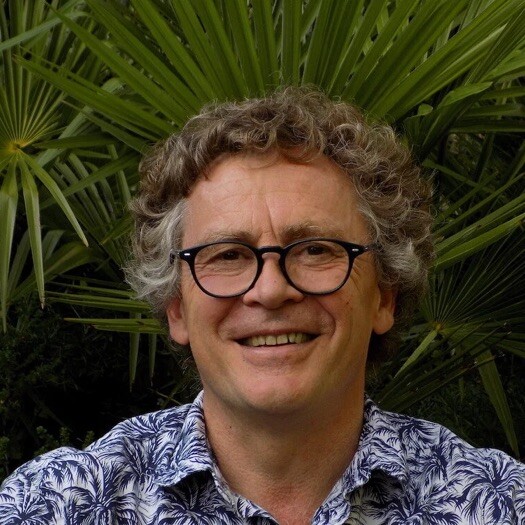
Hi, I’m Roland Ennos, a scientist who writes books that ask important questions about the world around us. How does it all work and how did it come to be that way?
For most of my working life I was a University Professor. I investigated how plants and animals (including ourselves) are engineered. I taught students about the marvels of the natural world and our impact on it. And I wrote textbooks to enrich my students’ studies.
Now I have left academia I can tackle the broader questions that have always fascinated me. I can investigate the history of our species, our relationship with the natural world and our place in the universe. I have been delighted to find something that I have long suspected: that the world about us makes much more sense if we incorporate science and engineering into the story.
The Revolutionary Story of Humanity
The Powerful Primate
How Homo Sapiens Came to Dominate the Planet

In The Powerful Primate I show that we dominate the world more because of our physical prowess and engineering skills than just our intellect. Standing upright enabled our ancestors to wield tools that made them the world’s top predator. Ten thousand years ago, the rigours of cereal cultivation drove them to develop ever more sophisticated tools and find new methods to power them. Finally, three hundred years ago industrialists developed machinery powerful enough to build an urbanised world that keeps us in ease and plenty. But having unleashed unprecedented destruction on the world, we need to find a way to curb our power so we don’t destroy our own planet.
“A nimble, wide-ranging history of homo faber, skillful man.”
Kirkus Reviews
The Book that Shows that Spin is All Around Us
The Science of Spin
How Rotational Forces Affect Everything from Jet Engines to the Weather
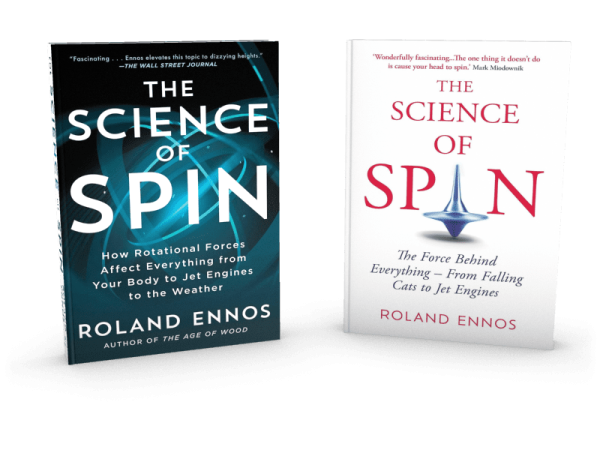
In The Science of Spin I show that rotation is fundamental to our lives. Spin helped create the universe: the solar system, black holes and galaxies. It’s thanks to the earth’s spin that we can survive on our planet, since it creates the earth’s magnetic field and diverts the winds to create our benign climate. We use rotating machinery to drive industry and power our urbanised world. And our bodies are themselves composed of rotating joints which we employ to balance, move around and use tools in ways we barely appreciate. Spin is all around us.
‘A wonderfully fascinating book with answers to so many everyday questions you never knew you needed to know.’
Mark Miodownik, author of Stuff Matters.
The Groundbreaking Environmental History of Humanity
The Age of Wood / The Wood Age
How Wood Shaped the Course of Human History

In The Wood Age I show that wood has always been and continues to be our most important material. Coming down from the wooden world of the forest canopy, our ancestors used wooden tools to obtain food, built wooden homes and made wood fires to keep themselves warm and cook their food. As stone and metal tools became available they were used to carve larger wooden buildings, create wooden wheels and build wooden ships. And in the modern age we use more wood than ever to make paper, create furniture and build a new generation of laminated timber buildings. We are still living in The Wood Age.
“A stunning book on the incalculable debt humanity owes to wood … ― nothing less than a complete reinterpretation of human history and prehistory, and it is written with enormous verve and pinpoint clarity.”
John Carey, The Sunday Times
The lavishly illustrated guide to the world's largest organisms
Trees
A Complete Guide to their Biology and Structure

Trees are the largest organisms on our planet and cover over 40% of the land surface, yet we all too often take them for granted. In Trees I unlock their fascinating lives by answering a few simple questions. Why do trees exist? How have they evolved? How do they lift water to their leaves and stand up against the wind? Why are there so many species? And how and why do we make use of trees? Having read the book you will never look at a wood in the same way ever again.
“…a marvellously informative look at trees…combine clarity and style…a rare pleasure to read…If only this could be a bestseller…”.
New Scientist
From the blog

Jane Austen – The Scientist
Posted on 15th April, 2026
The media frenzy about Jane Austen’s life and works that was stimulated by the 250 anniversary of her birth showcased the brilliance of her social commentary, the strength of her moral criticism, and the depth of her insight into human…
Read more
Why Gardening is the Future
Posted on 25th March, 2026
Few people can have been the object of so much ridicule as the enthusiasts of self-sufficiency. From Tom and Barbara Good in the BBC TV series The Good Life in the 1970’s and our current king, to today’s disciples of…
Read more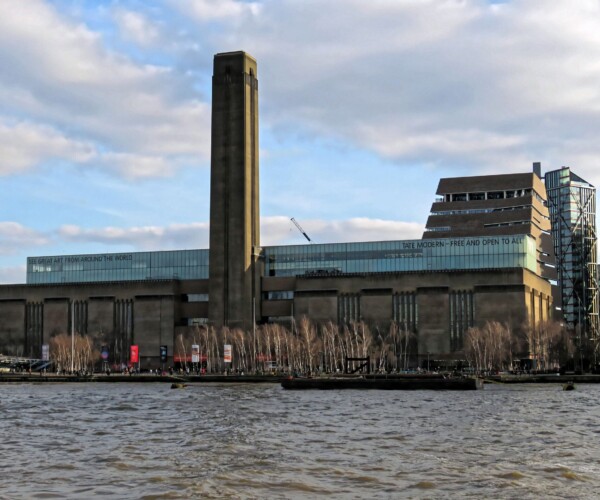
Art and Engineering at the Tate Modern Art Gallery
Posted on 2nd March, 2026
Each year some five million visitors make the pilgrimage to the South Bank of the Thames in London to visit the world-renowned Tate Modern art gallery. They pay homage to the huge collection of modern art and have often been…
Read more
It’s Not All About the Mathematics
Posted on 12th February, 2026
“Science is written in the language of mathematics” proclaimed Galileo in 1623. And over the last few centuries science has become ever more mathematical. Nowadays, mathematics, seems to hold total hegemony, particularly in the fields of quantum physics and relativity;…
Read more